Vassilis Kroustallis reviews the snow-capped film 'A Long Winter' by UK director Andrew Haigh.
No contemporary director describes loss better than Andrew Haigh. The director of Weekend (2011) and 'All of Us Strangers' (2023) seems ready to dive deep into the psyche of its characters, deeper than they themselves can do so. It's no wonder that his latest snow dive, 'A Long Winter', an essay into death and ur-gay consciousness, takes the same path to Colorado's Rocky Mountains at the beginning of the Korean War. The visually sprawling film, as immersive as any standard VR installation, works on a multi-character, spread-out narrative that doesn't always work in his favor. Yet it still delivers potent emotions and never lets the viewer off the emotional hook.
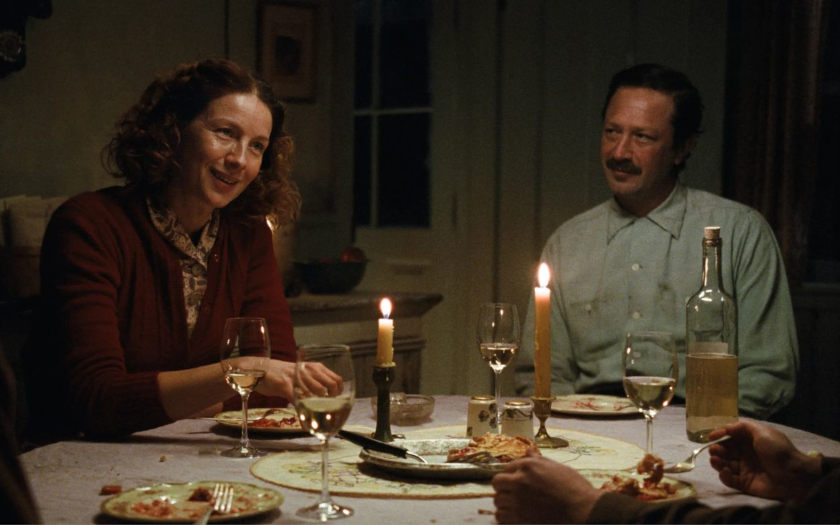
Based on a short story by the Irish Colm Tóibín, Andrew Haigh (also the film's writer) moves the action from the 1930s Spanish Pyrenees to the mountainous US (the film was shot in Alberta, Canada). The humble embodiments on this side of the mountain appear first as a static, unassailable point of reference, prominently displayed in the opening shots. (Haigh has done the same with flat buildings shot from the outside in 'Weeekend' and 'All Of Us Strangers'). A four-member family lives isolated there. The grumpy farmsteader Lester (Ebon Moss-Bachrach), his alcoholic, red-haired wife Louise (Caitríona Balfe), and their two boys, Mike (Fred Hechinger) and Tommy (Kit Connor). It's Tommy's turn to go to the army and Korea. The early bedroom scene between the brothers seems to set the table: Tommy is the independent one, who needs to leave his isolated encounter - even though he's better than Mike will ever be at farming and taking care of the rabbits (to be butchered and sold for profit) and the hens.
In contrast, Mike is the embodiment of Freud's theory of homosexuality as the boy's strong attachment to his mother (a concept both celebrated and ridiculed at length); he doesn't know it, but his relatives are quick to remind him that he was Mom's favorite boy and that "she always thought she would bear a girl". But all this goes into the background as long as everyone behaves mildly happy (and in an early, highly orchestrated dance scene involving all family members, everything seems to be functioning as it should be). But after a big fight with the hardened Lester, Louise disappears (along with Sandy, the dog) in the snow, and the weather makes it impossible to trace her steps; Mike is suddenly left alone to evaluate his grief.
Haigh makes it clear that his ghost stories are never one-sided. The farm still needs to function, and we see the steady abandonment of everything -the homophobic and ready-to-fight his neighbors and get away from his neighbors. Lester has no plans to do any maintenance. And after a few futile attempts, Mike seems to be the only one to do all of those things: maintain the farm, take long excursions into the snowy mountains to locate his mother (the nearest town is 15 miles away), and investigate his now-developing sexuality. First with almost-ghost partners, later (but furtively) with a biracial boy (D'Pharaoh Woon-a-Tai), who has been drafted to do the "wife's chores" in Lester's household
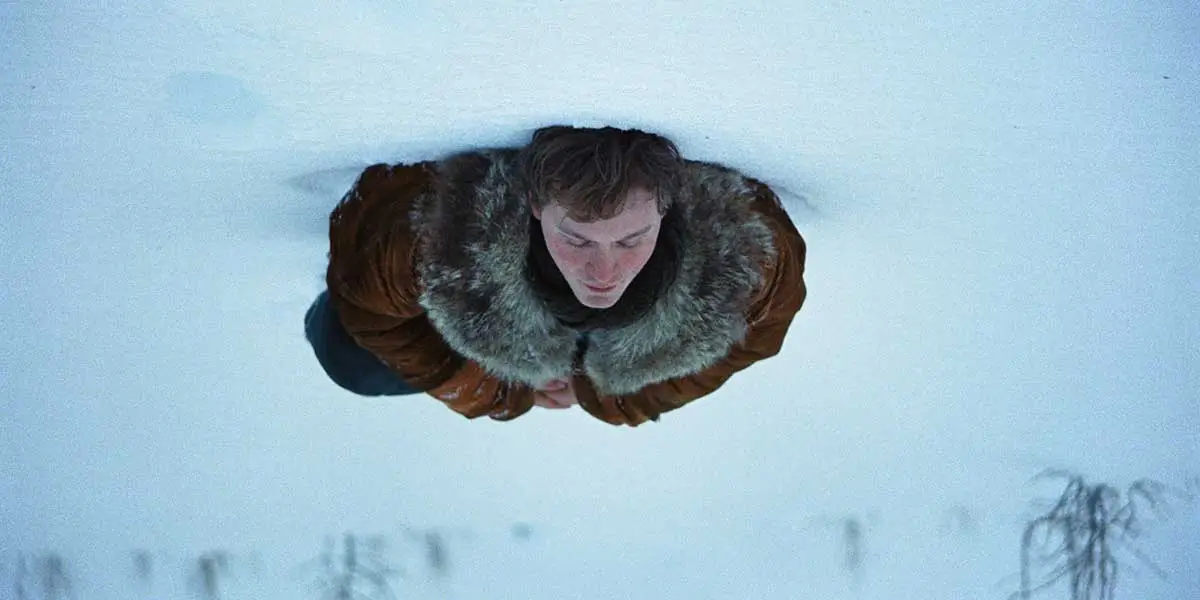
While the narrative focus steadily attends Mike's own identity process, cinematography (by André Turpin) envelops him with the most mesmeric surroundings, inviting him to enter a giant protective snow closet when he can finally be himself. Grief, sexual longing, and independence are all entangled in a film whose arc never seems to be what it should look like: for instance, the Perry Como's 'A Dreamer's Holiday' song-and-dance scene takes grief and ghost disappearance as the final step toward emancipation -a not usually told story, but equally experienced by the parents' death.
Less a metaphysical ghost story than 'All of Us Strangers', yet still with ghost-like appearances, 'A Long Winter' moves even further back in the past, when the 'Brokeback Mountain' characters could not even have exchanged a kiss. Yet even though homophobia is rampant in the household, Mike's story is more of an isolated country boy who has to confront feelings in the absence of any information (the Cosmopolitan magazines offer some pleasure). In a way, all family members are ghosts in an environment immune to petty comments and chitchat, but also hostile to any understanding beyond their rabbits and hens. The flying bird symbolism -vultures as the angels of death here- that bookends the film is as ironic as it should be; they scavenge the human remains, but they are the ones who fly free, as Mike should (?) be.
Haigh works better with just a couple of characters, and the quartet here (with top performances by Caitríona Balfe and Ebon Moss-Bachrach) seems to demand its own further space in the narrative; the parents have a strong story of their own, which doesn't fit Mike's story, and at times it bursts out of the screen, destabilizing the main character. Fred Hechinger quietly adopts the early investigative phase of adulthood, and his face becomes a place for all subsequent experiences to build upon. Haigh's works are not a hymn to queer power, but more of a reminder of increased queer (and ultimately human) fragility. 'A Long Winter' is no exception. It leaves a potent mark of identity gained in an almost transparent, dissolved version of ghosting grief; it inspires no transcendental awe, but gets under your skin.
contributed by: Vassilis Kroustallis
'A Long Winter' screened at the 2026 PÖFF (Tallin Black Nights Film Festival)
